
If your pool pump just went quiet, started grinding, or is running nonstop without actually circulating water, you already know the problem doesn’t fix itself. In Cape Coral, where nearly every backyard has a pool and the canal-heavy, salt-air climate wears down equipment faster than almost anywhere else in Florida, pool pump repair is one of the most common calls local pool companies get, especially between April and October.
This guide walks through what actually causes pump failures in this area, how to tell whether your unit needs a repair or a replacement, what a fair repair actually costs, and how to find dependable pool pump repair services in Cape Coral whether you own a backyard residential pool or manage a commercial or HOA property. It’s written from real field experience working on pumps across Cape Coral’s canal-front and inland neighborhoods, not generic advice copied from a manufacturer’s manual.
Why Pool Pumps Fail Faster in Cape Coral
Pool equipment in Cape Coral works harder than it does almost anywhere else in the country, and it’s not just the heat.
- Salt air corrosion. With hundreds of miles of canals feeding into the Caloosahatchee River and the Gulf, salt-laden air eats through seals, bearings, and metal housings faster than in inland cities.
- Year-round pump usage. Most Southwest Florida pools run their pumps 8 to 12 hours a day, every day of the year. That’s roughly double the runtime of a pool in a seasonal climate, which means double the wear.
- Storm season electrical stress. Summer thunderstorms and power flickers are routine here, and voltage spikes are one of the leading causes of sudden motor failure in coastal Lee County.
- Sand and debris intrusion. Newer construction areas and canal-adjacent yards often see more grit getting pulled into skimmers and baskets, which accelerates impeller and seal wear.
Understanding this context matters because it changes the advice. A pump that’s five years old in Ohio might be considered “young.” A pump that’s five years old and has run daily in Cape Coral heat has likely already lived most of its useful life.
Common Signs Your Pool Pump Needs Repair
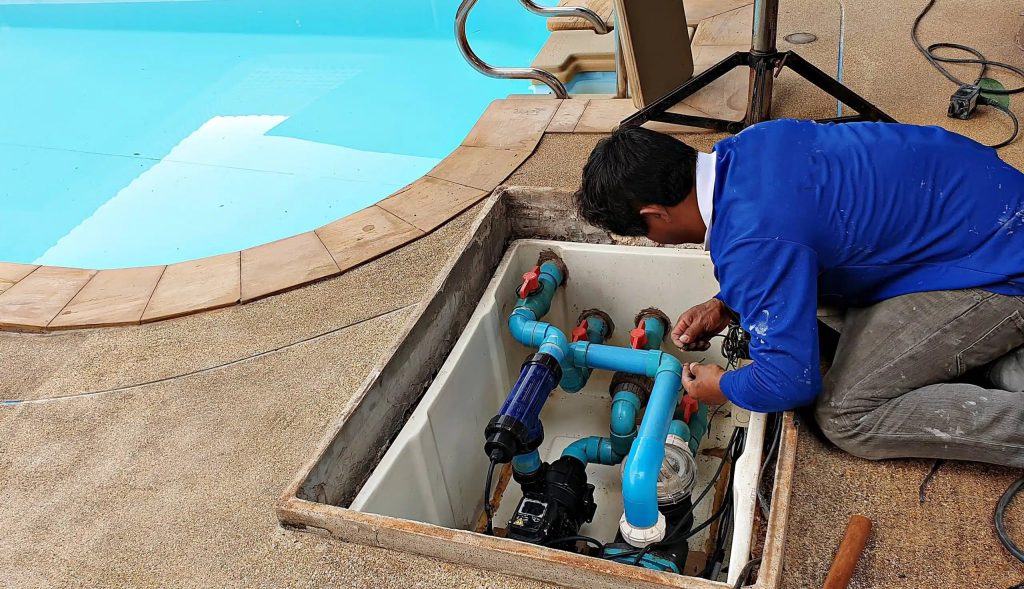
Most pump failures don’t happen overnight. There are almost always warning signs first, and catching them early is usually the difference between a $150 repair and a $900 replacement.
Watch for:
- Loud grinding, screeching, or rattling noises coming from the motor
- Pump running but little or no water flow at the returns
- Water leaking from the pump base, seal plate, or shaft area
- Pump tripping the breaker repeatedly or not turning on at all
- Cloudy or green water despite normal chemical levels (a sign of poor circulation)
- Unusually high electric bills, often the first clue of a failing motor drawing excess current
- Visible cracks in the pump housing or lid, especially after a storm
If you’re noticing even one or two of these, it’s worth getting a technician out before the pump fails, especially heading into peak swim season when a dead pump can mean days of green, unusable water.
Repair vs. Replace: How to Actually Decide
This is the question every homeowner asks, and honestly, the answer isn’t the same for everyone. Here’s the general framework a technician should walk you through:
A good rule of thumb: if the repair cost creeps past 40 to 50 percent of what a new, comparable pump would cost installed, replacement is usually the smarter long-term move, particularly with variable speed pool pump repair and replacement options now costing less than they did a few years ago while cutting energy bills significantly.
Pool Pump Repair Services in Cape Coral: What’s Actually Included
A proper repair visit should never just be a guess-and-swap job. Here’s what a thorough pump repair service in Cape Coral typically covers:
- Diagnostic inspection – checking motor function, electrical draw, seal condition, impeller clearance, and basket/strainer flow
- Seal and gasket replacement – the most common repair, especially on pumps over 3 years old in this climate
- Capacitor and wiring checks – common after storm season voltage spikes
- Bearing replacement – addresses the grinding or squealing noise most homeowners describe
- Impeller cleaning or replacement – restores water flow when debris or scale buildup is blocking circulation
- Full system test – confirming proper pressure, flow rate, and quiet operation before the technician leaves
Reputable swimming pool pump repair in Cape Coral companies should give you a written estimate before starting work, not after, and should be upfront if a repair isn’t worth it compared to replacement.
Finding Reliable Pool Pump Repair Near Me in Cape Coral
Searching “pool pump repair near me” pulls up a long list of options, so here’s what actually separates a dependable local company from a risky one:
- Local licensing and insurance specific to Florida pool contracting, not just a general handyman license
- Same-day or next-day availability, since a dead pump during peak season isn’t something that should wait a week
- Transparent, itemized pricing rather than vague flat “service call” fees that balloon once they’re in your yard
- Experience with your specific pump brand (Pentair, Hayward, Jandy, and Sta-Rite are the most common in this area)
- Real local reviews, ideally mentioning Cape Coral neighborhoods by name, not generic five-star spam
- Warranty on parts and labor, typically 90 days to 1 year depending on the repair
If a company can’t answer basic questions about your pump model over the phone or won’t give a rough price range before arriving, that’s usually a sign to keep looking.
Commercial Pool Pump Repair in Cape Coral
Cape Coral has an unusually high number of gated communities, condo complexes, vacation rental properties, and HOA-managed pools, which means commercial pool pump repair is its own category with different demands than a backyard residential job.
Commercial and HOA pools typically run:
- Larger, higher-horsepower pumps operating longer daily hours
- Multiple pump systems (main circulation, spa, water feature) that need to be diagnosed together
- Stricter code compliance tied to Florida Department of Health pool regulations, since these are public-use pools
- Tighter timelines, since a shut-down community pool affects dozens or hundreds of residents at once
A company handling commercial work should be comfortable coordinating with property managers, working around Florida DOH inspection requirements, and scheduling repairs with minimal downtime for residents. This isn’t a job for a general residential technician working outside their normal scope.
Swimming Pool Pump Installation in Cape Coral: When Repair Isn’t Enough
Sometimes the honest answer is that repair just doesn’t make sense anymore. Pool pump installation in Cape Coral typically comes up in a few scenarios:
- The existing pump is beyond economical repair (burnt motor, cracked housing, obsolete parts)
- You’re upgrading from a single-speed to a variable-speed pump to reduce energy costs, which can lower pump-related electric costs by a meaningful margin annually depending on usage
- You’re required to upgrade under updated Florida energy code requirements for new pump installations
- You’re doing a broader pool equipment overhaul (filter, heater, pump all at once) and it makes sense to replace everything together
A proper installation includes correctly sizing the pump to your pool’s gallon volume and plumbing setup, not just swapping in whatever unit is in stock. An undersized or oversized pump leads right back to the same repair problems down the road.
Simple Maintenance Tips to Extend Pump Life
While professional repair handles the bigger issues, a few habits go a long way toward preventing premature failure in Cape Coral’s climate:
- Clean the pump basket weekly, more often after storms or heavy pollen season
- Keep the pump area shaded if possible; direct Florida sun accelerates plastic housing degradation
- Have the system inspected before hurricane season and again before peak summer swim season
- Avoid running the pump dry, even briefly, since this is one of the fastest ways to burn out a seal
- Watch your electric bill for unexplained increases, an early flag for motor strain
Conclusion
A failing pool pump in Cape Coral isn’t just an inconvenience; in this climate, standing water without proper circulation turns green fast, and a small seal leak today can become a burnt-out motor within weeks if it’s ignored. Whether you need a quick seal replacement, a full commercial system diagnostic, or a new variable-speed installation, working with a local team that understands Cape Coral’s specific wear conditions, salt air, storm season, and near-constant pump runtime makes the difference between a repair that lasts and one you’re paying for again next year.
If your pump is making noise, losing pressure, or has simply stopped working, getting it looked at sooner rather than later is almost always the cheaper path.
FAQ’s
How much does pool pump repair cost in Cape Coral?
Most repairs range from $150 to $450 depending on the issue, seal replacements and capacitor swaps are on the lower end, while motor rebuilds run higher. A technician should give you an exact quote after diagnosing the specific problem.
How do I know if I need a new pool pump instead of a repair?
If your pump is over 7-8 years old, has a burnt motor, or the repair cost is close to half the price of a new unit, replacement is usually the smarter choice. A technician can confirm this after inspection.
Why is my pool pump running but not pumping water?
This is often caused by a clogged skimmer basket, air leak in the suction line, or a worn impeller. It can also signal the pump has lost prime and needs to be re-primed properly.
How long does a pool pump repair take?
Most residential repairs are completed same-day or within 24 hours once parts are on hand. Commercial or specialty part repairs may take slightly longer depending on availability.
Do you repair variable-speed pool pumps in Cape Coral?
Yes, variable-speed pumps require specialized diagnostic tools for the control board and motor electronics, and a qualified technician should have experience specifically with these models, not just standard single-speed units.
Can a pool pump be repaired after a storm power surge?
Often, yes, if the damage is limited to the capacitor or wiring. If the motor windings themselves were damaged by the surge, replacement is typically more cost-effective than repair.