Your pool looks fine on Monday. By Thursday, the water has a faint haze to it, the pressure gauge on the filter is reading higher than it usually does, and no amount of extra chlorine seems to fix it. If that sounds familiar, you’re not dealing with a chemistry problem. You’re dealing with a filtration problem, and in Cape Coral, that usually means one of three specific systems- sand, cartridge, or DE- is telling you something before it fails outright.
Pool filter services in Cape Coral, FL exist for exactly this moment: the gap between “something’s off” and “I need to call someone.” This guide walks through what the pressure gauge is actually telling you, how the three filter types fail differently, why Cape Coral’s water works against your filter more than water in a lot of other Florida cities, and how to tell whether you’re looking at a $150 repair or an $800 replacement before a technician ever shows up.
Signs Your Pool Filter Needs Attention, Not Just a Rinse
A lot of homeowners assume cloudy water means “add more chlorine” and a high reading on the pressure gauge means “time to backwash.” Sometimes that’s true. Often it isn’t, and here’s the difference:
- Pressure reading 8 to 10 PSI above your clean, freshly backwashed baseline. This usually means the filter media (sand, cartridge pleats, or DE powder) is genuinely clogged, not just due for a rinse. If backwashing brings the number right back down within a day or two, the media itself may be nearing the end of its life.
- Cloudy water that persists after balanced chemistry and a full filter cycle. If your chlorine, pH, and alkalinity are all in range and the water still won’t clear, the filter isn’t catching what it should be, which points to torn cartridge pleats, cracked laterals inside a sand filter, or a ripped DE grid.
- Water returns to the pool faster or with less resistance than normal. This can mean water is bypassing the filter media entirely through a crack in the tank or a failed multiport valve seal.
- Visible sand or DE powder in the pool itself. This is a clear sign of a mechanical failure inside the filter, not a chemistry issue, and it shouldn’t wait.
- A filter that’s noticeably heavier or lighter than it should be, or standing water pooling around the base of the tank, both point toward a structural crack or a seal that’s given out.
None of these are backwash-and-forget situations. They’re diagnostic signs, and reading them correctly the first time is what separates a $150 fix from a repair bill that keeps growing because the wrong part got replaced.
Sand, Cartridge, and DE Filters: Which One You Have and How Each One Fails
Not every filter fails the same way, and a swimming pool filter service call that starts with “let’s figure out what type you actually have” saves time and money compared to one that guesses. Here’s how the three compare:
Sand filters are the most forgiving and the cheapest to keep running, but they’re also the least fine at filtering, which shows up as slightly hazier water even when everything’s working correctly. Cartridge filters catch more and don’t need backwashing, which saves water, but the cartridges themselves need more frequent attention. DE filters filter the finest of the three but have the most moving parts to go wrong, and they’re the most sensitive to Cape Coral’s water chemistry.
A tech who knows the difference will check the pressure gauge, then physically inspect the correct part for that filter type, laterals for sand, pleats for cartridge, grids for DE, rather than assuming one problem looks like another.
Why Cape Coral’s Water Is Harder on Filters Than You’d Expect
This is the part most competitor sites skip entirely, and it matters. Cape Coral sits on a network of canals, and a lot of the city’s municipal and well water carries more dissolved mineral content, calcium and magnesium in particular, than water in some inland Florida markets. That harder water does two things to a filter system over time:
- It accelerates scale buildup inside cartridge pleats and sand filter housings. Mineral deposits reduce flow through the media faster than dirt alone would, which means a filter can read “clogged” on the pressure gauge well before its actual media life is up.
- It stresses valve seals and gaskets faster, since mineral scaling makes rubber and plastic components brittle sooner than they’d wear in softer water.
On top of the water itself, Cape Coral pools run close to year-round. Unlike a lot of the country where a pool sits closed for four or five months, filters here rarely get a real break, and the rainy season (June through September) adds organic debris, leaves, pollen, and wind-blown dirt from tropical storms that push filters harder for weeks at a stretch. A filter that might last seven years in a seasonal climate can show real wear in five here, which is worth knowing before you assume a filter “shouldn’t” be failing yet.
Pool Filter Repair vs. Pool Filter Replacement: How to Actually Decide
This is the question that matters most once a tech confirms something’s wrong, and it deserves a straight answer instead of a sales pitch. Here’s a general framework; actual quotes will vary by filter size and brand, but this gives you a real starting point:
The general rule of thumb: if a repair quote comes in at 50% or more of what a full replacement costs, and the filter is already past the middle of its expected lifespan, replacement is usually the better long-term value. A tech being straight with you about that upfront, instead of stacking small repairs on an aging unit, is one of the clearest signs you’re dealing with someone diagnosing the problem honestly rather than working the ticket.
How Often a Pool Filtration System in Cape Coral Actually Needs Service
Between full professional visits, a basic maintenance rhythm keeps most filters running closer to their full expected lifespan:
- Weekly: Check the pressure gauge against your clean baseline number. Write it down somewhere; it’s the single easiest way to catch a developing problem early.
- Every 4 to 6 weeks: Backwash a sand or DE filter, or rinse cartridge filters, more often during the rainy season or after a storm.
- Twice a year: A more thorough cartridge cleaning (a soak in filter cleaner solution, not just a hose rinse) or a full DE grid inspection.
- Annually: A professional inspection that checks valve seals, O-rings, and the tank itself, not just the media, since these parts fail on their own schedule independent of how often you’ve backwashed.
Skipping the annual inspection is where most avoidable failures happen. A seal or O-ring that’s showing early wear costs very little to replace proactively and considerably more once it fails and lets water bypass the filter media entirely.
What a Professional Filter Service Visit Should Actually Include
A pool filtration system in Cape Coral only gets diagnosed correctly when every step happens in the right order, not when a tech jumps straight to swapping a part because it’s the easiest guess. A thorough visit typically looks like this:
- Pressure gauge reading first, compared against what a clean baseline should be for that filter size and type.
- Visual inspection of the tank, valve, and connections for cracks, leaks, or scaling before anything gets opened up.
- Media-specific inspection, laterals for sand, pleats and end caps for cartridge, grids and manifold for DE.
- A check of the pump and plumbing, since a struggling pump and a clogged filter produce nearly identical symptoms and it’s worth ruling one out before blaming the other.
- A clear explanation of findings and pricing before any repair or part replacement happens, broken out by filter type so a cartridge swap and a sand filter valve rebuild are never priced the same by mistake.
If a quote you get skips straight to “you need a new filter” without walking through steps one through four, that’s worth a second opinion.
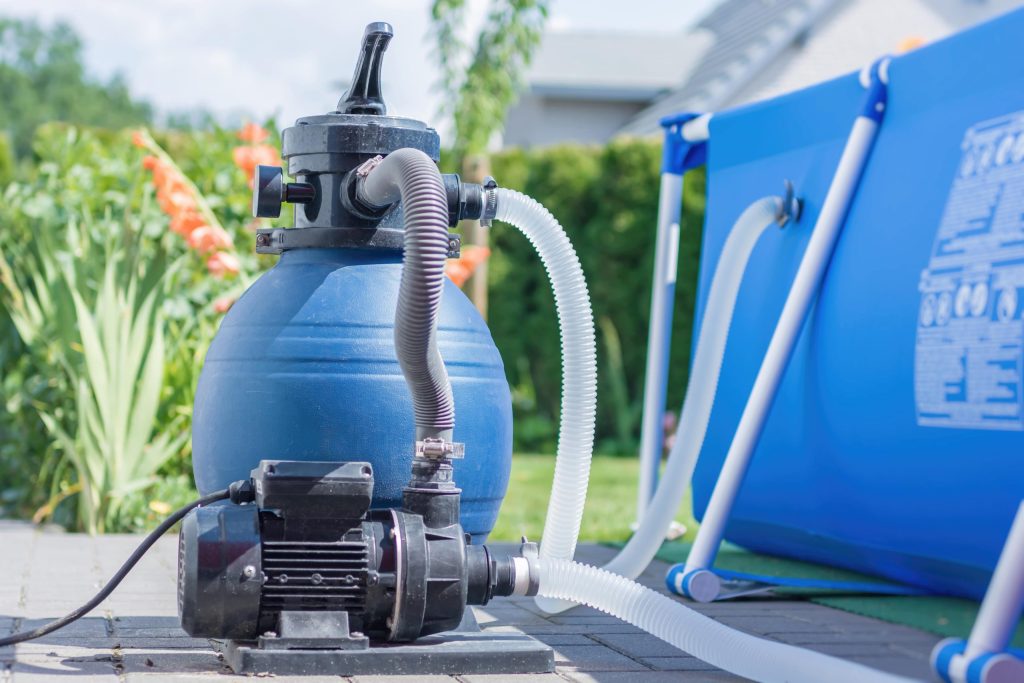
DIY Maintenance vs. Calling a Professional
Homeowners can safely handle the basics: backwashing, rinsing cartridges, checking the pressure gauge, and keeping chemistry balanced. Where it makes sense to call a licensed pool professional instead:
- Opening a multiport valve or DE manifold; these have small parts that are easy to misassemble
- Any visible crack in the tank itself
- Repeated pressure spikes that backwashing doesn’t resolve
- Sand or DE powder appearing in the pool
- Anything involving Florida’s contractor-licensed scope of work, which covers filter system rebuilds and upgrades, not just basic cleaning
In Florida, work beyond routine backwashing or rinsing (rebuilding laterals, upgrading a filter type, replacing a tank) falls under the state’s contractor licensing requirements, the same credential that covers pool renovation and equipment work generally. That’s worth confirming before hiring anyone for more than a basic cleaning.
Choosing a Pool Filter Service Company in Cape Coral
A few practical things worth checking before you book anyone for pool filter repair in Cape Coral:
- Do they ask which filter type you have before quoting a price? A real diagnosis starts there, not with a flat “filter service” rate.
- Do they explain pricing by part and labor, broken out by filter type, rather than a single bundled number that doesn’t tell you what you’re actually paying for?
- Are they licensed for the full scope of pool equipment work in Florida, not just basic cleaning and chemical service?
- Do they check the pump alongside the filter when symptoms could point to either, instead of assuming the more obvious (or more expensive) fix?
- Will they tell you honestly when a repair isn’t worth it compared to a straightforward replacement?
A company that answers yes to all five is generally diagnosing the problem rather than guessing at it, which is the difference between a fix that lasts and one that has you calling again in a month.
Bringing It All Together
A cloudy pool or a stubborn pressure gauge almost always traces back to the filter, and in Cape Coral specifically, harder water and near year-round use mean filters often show wear sooner than homeowners expect. Knowing your filter type- sand, cartridge, or DE, reading your own pressure gauge, and understanding the general repair-versus-replace math puts you in a much better position before you ever make the call. When it’s time to bring in a professional, the right pool filter services in Cape Coral, FL start with a proper diagnosis by filter type, not a guess.
FAQ’s
How do I know if my pool filter needs repair or just cleaning?
Check the pressure gauge against your clean baseline reading. If backwashing or rinsing brings pressure back down and stays there, it likely just needed cleaning. If pressure climbs back up within days, or water stays cloudy after balanced chemistry, the filter media or a part is likely failing.
How long do pool filters last in Cape Coral, FL?
Sand media typically lasts 5 to 7 years, cartridges 2 to 5 years, and DE grids 5 to 10 years. Cape Coral’s mineral-heavy water and near year-round pool use often shorten these ranges compared to cooler, seasonal climates.
Is it cheaper to repair or replace a pool filter?
It depends on the failure. A cracked lateral or a torn cartridge is usually a cheap repair. A cracked tank, or a repair quote near 50% of replacement cost on an older filter, usually makes replacement the better long-term value.
What type of pool filter is best for Cape Coral homes?
Each type trades off differently: sand is low-maintenance and affordable, cartridge filters more finely without backwashing, and DE filters the finest but needs the most upkeep. The right choice depends on your pool size, usage, and how much maintenance you want to do yourself.
How often should a pool filter be backwashed or cleaned?
Most filters need backwashing or rinsing every 4 to 6 weeks, more often during Florida’s rainy season or after a storm. A full inspection once a year catches wear in seals and valves that regular cleaning won’t reveal.
Can I repair my own pool filter, or do I need a licensed professional?
Basic backwashing, rinsing cartridges, and checking pressure are fine to do yourself. Anything involving a cracked tank, valve rebuilds, or filter type upgrades falls under Florida’s contractor licensing requirements and should go to a licensed professional.