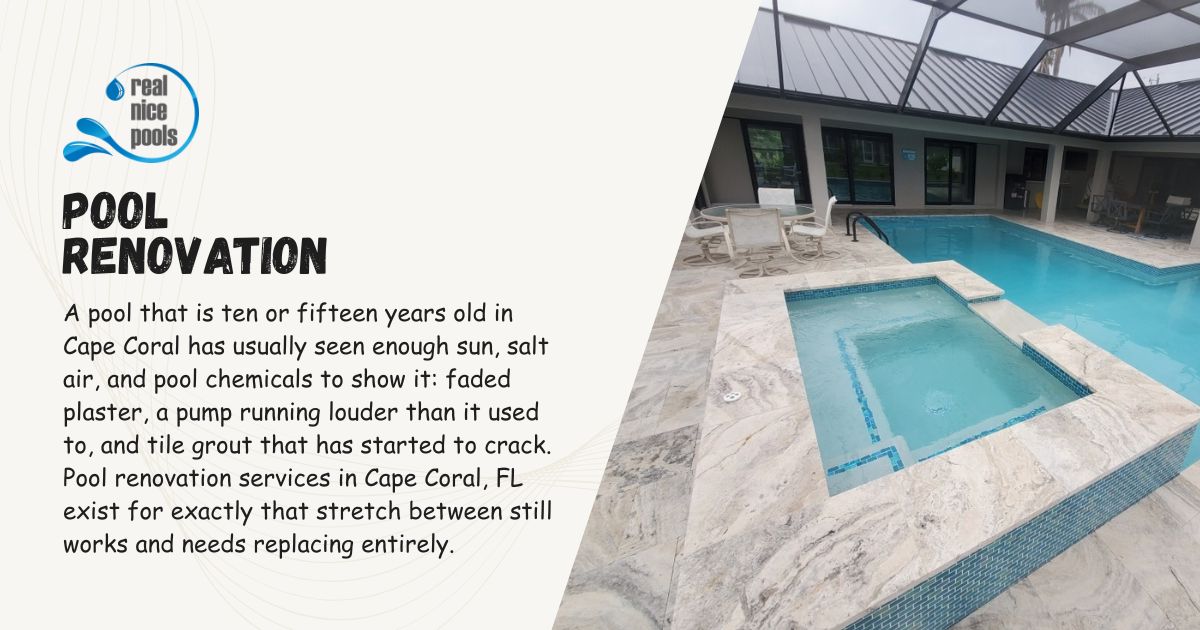
If your pool in Cape Coral is looking tired – chalky plaster, cracked tile, a deck that’s lifting at the edges, or equipment that just can’t keep up anymore – you’re not alone. With more than 400 miles of navigable canals and a subtropical climate that keeps pools in near-constant use, Cape Coral has one of the highest concentrations of residential pools in Florida, and most of them are ten, twenty, even thirty years past their original finish. A well-planned pool renovation services in Cape Coral doesn’t just restore the way your pool looks; it fixes the structural and mechanical issues that cause bigger (and more expensive) problems down the road.
This guide walks through what pool renovation actually involves in this market, what drives cost and timeline, how residential and commercial projects differ, and the questions worth asking before you sign a contract.
Why Cape Coral Pools Age Differently
Pools here don’t age the way they do in drier, cooler climates. A few local factors matter more than most homeowners realize:
- Groundwater and canal proximity – many Cape Coral properties sit close to canals or have naturally hard, mineral-heavy groundwater, which accelerates scaling and etching on plaster and pebble finishes.
- Year-round sun exposure – UV degradation on pool decks, coping, and exposed plumbing is faster here than in most of the country.
- Humidity and salt air – even pools miles from the Gulf see accelerated corrosion on metal fixtures, ladders, and equipment pads.
- Hurricane season timing – renovation projects are often scheduled around June–November storm risk, which affects both material curing and contractor availability.
These conditions are exactly why a generic, one-size-fits-all pool renovation approach underperforms here. Materials, sealants, and equipment need to be matched to Southwest Florida conditions, not just whatever is cheapest or fastest to install.
What “Pool Renovation” Actually Covers
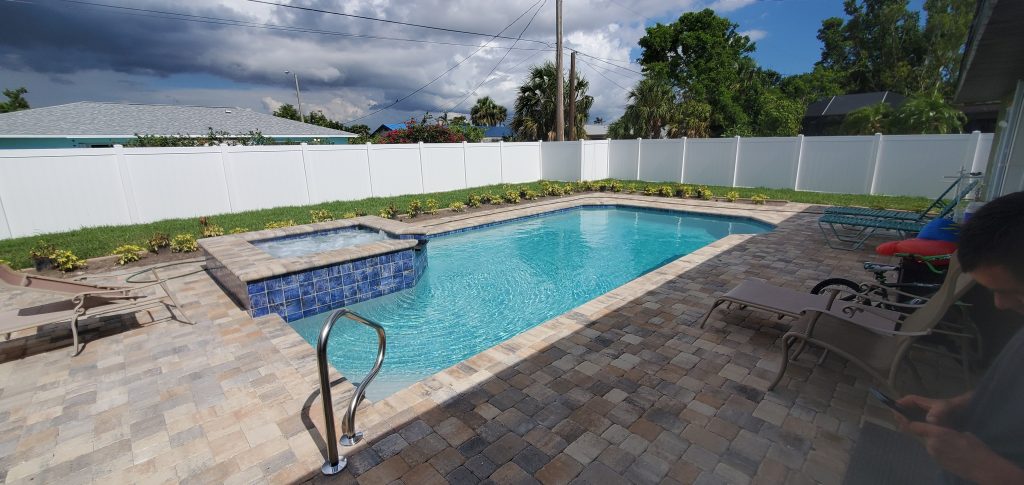
Renovation is a broader category than most homeowners expect. Depending on your pool’s age and condition, a project might include one or several of the following:
- Resurfacing – replacing worn plaster, pebble, or quartz finish
- Tile and coping replacement – waterline tile, step tile, and deck coping
- Deck renovation or resurfacing – repairing cracked concrete, adding pavers, or applying a cool-deck coating
- Plumbing updates – replacing aging PVC lines, fixing chronic leak points
- Equipment upgrades – new pumps, filters, heaters, or automation systems
- Structural repairs – addressing settling, shell cracks, or shifting around the pool
- Feature additions – sun shelves, spillover spas, water features, or LED lighting retrofits
Most renovation projects here combine two or three of these rather than tackling everything at once, which keeps cost and downtime manageable.
The Renovation Process, Step by Step
A properly run renovation follows a sequence – skipping steps is where most renovation problems (and callbacks) come from.
- Inspection and assessment. A technician evaluates the shell, plumbing, deck, and equipment to determine what’s cosmetic and what’s structural. This step should always happen before a quote is finalized, not after.
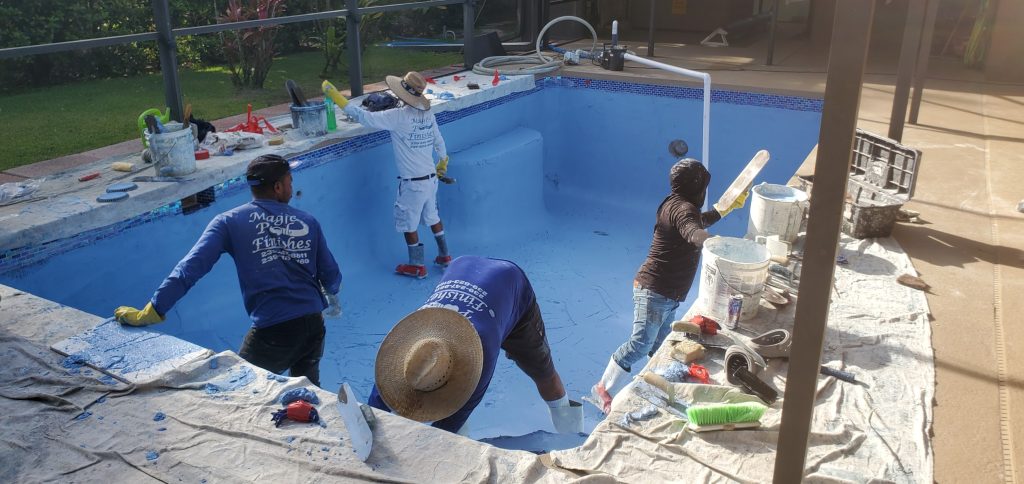
- Draining and surface prep. The pool is drained and the existing surface is chipped or bead-blasted down to a sound substrate. This is also when hidden issues – hairline cracks, old repairs, delamination – usually surface.
- Structural and plumbing repairs. Any cracks, plumbing leaks, or equipment pad issues get addressed before new surfacing goes on. Renovating over an unresolved leak just hides the problem temporarily.
- Tile, coping, and deck work. Waterline tile and coping are set, and deck resurfacing or repair happens in parallel where possible.
- Resurfacing application. Plaster, pebble, or quartz finish is applied and hand-troweled or sprayed, depending on material.
- Curing and startup. The pool is refilled following a specific chemical startup sequence to prevent surface staining or etching – this step is frequently rushed by less experienced crews, and it shows within the first year.
- Final equipment integration and walkthrough. Pumps, filters, and automation are tested and calibrated before handoff.
What Drives Renovation Cost in Cape Coral
Every renovation quote is different, but the cost swings almost always come down to the same handful of factors:
Several key factors significantly influence the overall cost of a pool renovation project. The size and shape of the pool dictate the total amount of materials and labor hours required, while the choice of surface material plays a major role in budgeting standard plaster offers the most affordable upfront option, whereas pebble and quartz finishes require a higher investment in exchange for greater durability.
Unforeseen structural repairs, such as hidden cracks or plumbing leaks uncovered during the project, along with the scope of tile and coping work, can also expand the budget, especially if a full waterline replacement is needed instead of spot repairs. Additionally, deck conditions dictate expense, as resurfacing an existing deck is far more economical than replacing it entirely with new pavers. Finally, practical considerations such as limited backyard access for heavy equipment can increase overall labor time, though pairing structural renovations with long-overdue equipment upgrades can help optimize costs by avoiding a second mobilization fee down the road.
Homeowners researching “pool renovation cost Cape Coral” should treat any online estimate as a starting range, not a quote – the only reliable number comes from an in-person inspection, since two pools of the same size can have very different underlying conditions.
Residential Pool Renovation vs. Commercial Pool Renovation
This distinction matters more than most articles on this topic acknowledge, because the two projects are run almost entirely differently.
Residential renovation typically focuses on one backyard pool, with flexible timing and fewer regulatory hurdles beyond a standard county permit. Homeowners usually prioritize appearance, longevity of finish, and matching the pool to how the family actually uses it – tanning ledges, spillover spas, or LED lighting upgrades are common additions.
Commercial pool renovation – for HOAs, condo associations, apartment complexes, hotels, and resorts – involves a different set of priorities:
- Minimizing downtime, since a closed commercial pool affects residents or guests, not just one household
- Compliance with Florida Department of Health commercial pool codes, which are stricter than residential requirements around depth markers, drain covers, ADA access, and fencing
- Higher-traffic-rated materials, since commercial pools see far more bather load and chemical usage
- Phased scheduling, often coordinating with property management or board approval timelines
- Liability and insurance documentation, which boards and property managers should always request before approving a contractor
If you’re managing a community pool, request references from other HOA or commercial projects specifically – residential experience alone doesn’t guarantee a contractor understands commercial code requirements.
Permits and HOA Approval in Cape Coral
Most resurfacing, tile, and deck renovation work in Lee County requires a permit, and larger structural or plumbing changes almost always do. A reputable contractor pulls permits as part of the project rather than leaving it to the homeowner, and should be able to show you the permit number once it’s issued. If you live in a deed-restricted community, factor in HOA approval time separately – some associations require design review for deck color, coping style, or added features before work can start, which is worth building into your project timeline from the beginning.
How Long Does a Pool Renovation Take?
For a standard residential resurfacing and tile project, plan on roughly 1 to 3 weeks from drain to refill, weather permitting – Florida’s summer storm pattern is the most common cause of delays. Projects that include deck replacement, structural repair, or equipment overhauls typically run 3 to 6 weeks. Commercial projects vary widely in scope and phasing, but should always include a written timeline and defined milestones, not just a start date.
Choosing a Pool Renovation Company in Cape Coral
A few questions separate a solid renovation contractor from one that will cost you a second renovation in five years:
- Are they licensed and insured specifically for pool construction/renovation in Florida?
- Do they pull permits themselves, or leave that to you?
- Can they show recent local project photos or references – ideally something within Cape Coral or Lee County?
- Do they inspect the shell and plumbing before quoting, or quote sight-unseen?
- What’s their warranty on the surface finish, and what does it actually cover?
- For commercial projects: do they have experience specifically with HOA, condo, or hospitality pools?
A contractor who answers these clearly, in writing, is generally one worth trusting with a project this significant.
Conclusion
A pool renovation is one of the larger investments most homeowners make in their property, and in Cape Coral’s climate, doing it right the first time matters more than almost anywhere else in the state. Whether you’re refreshing a backyard pool that’s due for new plaster and tile, or coordinating a full commercial renovation for a condo association, the projects that go smoothly are the ones built on a proper inspection, honest scoping, and materials chosen for local conditions – not just the lowest bid.
FAQ’s
How much does a pool renovation cost in Cape Coral, FL?
Cost depends heavily on pool size, surface material, and how much structural or plumbing repair is needed. A basic resurfacing and tile job costs far less than a full renovation with deck and equipment upgrades. Always get an in-person inspection before comparing quotes.
How long does a pool renovation take?
Most residential resurfacing projects take 1 to 3 weeks from draining to refill. Projects involving deck replacement or structural repairs typically take 3 to 6 weeks, with Florida’s summer storm season being the most common cause of delays.
Do I need a permit to renovate my pool in Cape Coral?
Yes, most resurfacing, tile, and structural work in Lee County requires a permit. A reputable contractor pulls the permit as part of the project and can provide the permit number once it’s issued.
What’s the difference between residential and commercial pool renovation?
Commercial renovations for HOAs, condos, and hotels must meet stricter Florida Department of Health codes, minimize downtime for residents or guests, and use higher-traffic-rated materials – priorities that don’t apply the same way to a single backyard pool.
How often should a pool be resurfaced?
Most plaster finishes last roughly 7 to 15 years depending on water chemistry and maintenance, while pebble and quartz finishes tend to last longer. Cape Coral’s mineral-heavy water can shorten that window if chemistry isn’t well maintained.
Can I renovate my pool without draining it completely?
Full resurfacing requires draining the pool, since the existing surface must be removed down to a sound substrate. Some cosmetic tile or deck repairs can be done without a full drain, but that depends on the specific scope of work.